

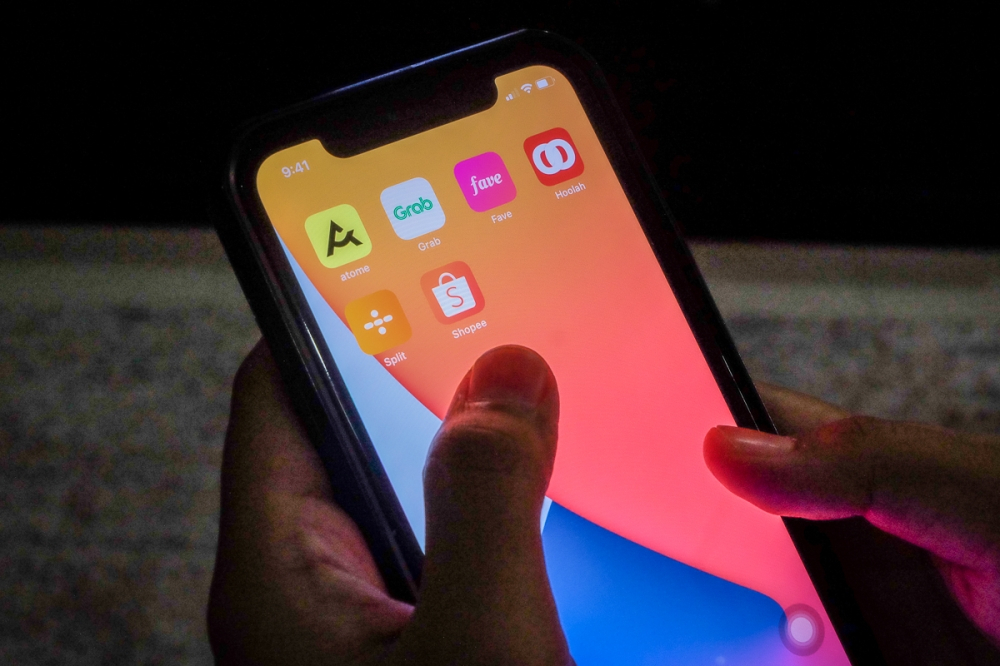
By Anis Zalani
KUALA LUMPUR, May 20 — It starts with a small, forgettable purchase.
The first time Syarlina Zakaria used a Buy Now, Pay Later (BNPL) service, she barely remembered what she bought. It was just a minor transaction around 2019, notable only for how seamless and harmless it felt.
For a generation of young Malaysians, that moment has become a digital rite of passage. BNPL has since embedded itself into daily life, not through a single major decision, but through the slow, quiet accumulation of seemingly insignificant payments.
“It just seemed incredibly convenient,” Syarlina, a 29-year-old housewife, told Malay Mail. “Nothing major, just small purchases. Honestly, it seemed completely harmless at first.”
Today, she juggles three BNPL platforms. The appeal, she admits, is the powerful illusion of affordability. BNPL doesn’t reduce the cost of a purchase; it merely rearranges it. But for the human brain, the difference is profound.
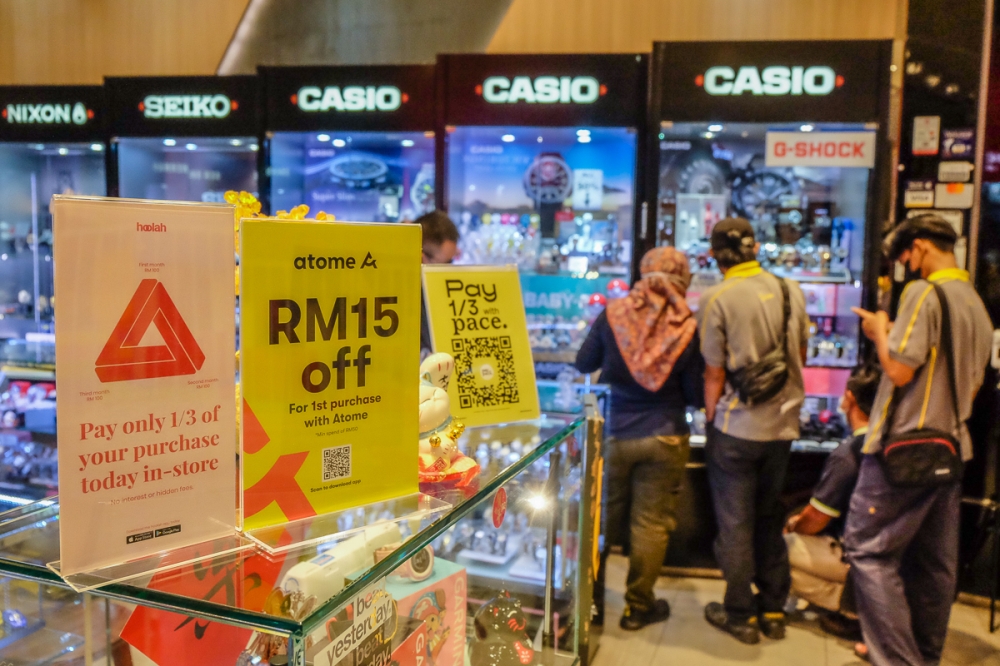
Syarlina Zakaria said BNPL does not make anything cheaper but simply spreads the cost, and that small shift is enough to make spending feel far more manageable than it actually is. — Picture by Yusof Isa
“Small RM10 or RM30 purchases don’t feel like much, but if you’re not careful, they can quietly add up to hundreds by the end of the month,” she explained.
“I used to be an impulsive spender, so I didn’t realise how much I was actually spending until I noticed my BNPL commitments were almost the same as my credit card bills. That made me nervous.”
Syarlina's experience is part of a national trend. In January, Deputy Finance Minister Liew Chin Tong revealed that over 70 per cent of active BNPL users in Malaysia are from the lower-income B40 group.
Around 40 per cent are aged 30 and below, using the service for daily necessities like food, groceries, and transport.
For Harinder Singh, a 38-year-old growth consultant, that frictionless convenience proved far more costly. His introduction to BNPL came during the pandemic, and when one BNPL provider upgraded his limit to RM3,000, the spending felt natural.
“It felt like free money,” he recalled. “I’d spend RM300 on food and drinks without thinking. But that adds up to an extra RM1,200 a month, and you don’t realise it until you’re paying out of savings, living pay cheque to pay cheque.”
The damage deepened with each payment cycle. Collection calls started at 8am and continued past 7pm daily. His emergency fund vanished, hollowed out by a service that began as a simple convenience.
“Each cycle, I’d be working harder just to pay off food I’d already eaten,” he said. “That’s when I realised, I’m literally borrowing to eat.”
When a banking issue left him stranded without funds while travelling abroad, he turned to a BNPL firm, which deposited RM3,000 into his account within hours.
“It felt like a solution, but it wasn’t; it was just debt with a different label,” said Harinder, who described the industry to the instalment schemes of yesteryear but amplified by magnitudes.
“The notifications push you, the wallet is always there, the limit keeps getting reinstated. It’s the old predatory model on steroids.”
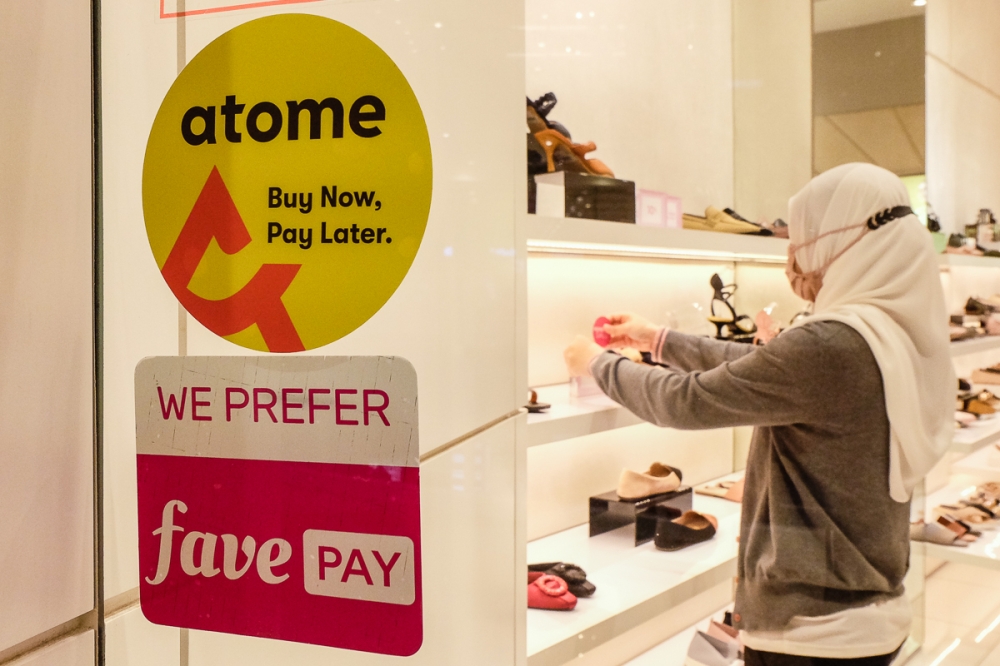
For many Malaysians, BNPL has quietly worked its way into daily life, one small and seemingly harmless transaction at a time. — Picture by Yusof Isa
Even disciplined users find themselves nudged towards overspending. Aisyah Safiyyah, a 25-year-old dietitian from Kota Bharu, Kelantan, uses BNPL to manage her budget for skincare and medication, capping her monthly commitments at RM400.
Yet, she admits the structure encourages impulse buys.
“Yes, especially when I kept adding more products than I intended, knowing I could split the payments. It just feels easier to justify when there’s no interest involved,” she said.
When she missed a payment once, the consequences were swift and anxiety-inducing.
“They started spamming me with repeated reminders through chat,” she recounted.
“It made me feel anxious, and I would end up paying immediately just to stop the notifications. Afterwards, I would actually feel a sense of regret for using BNPL in the first place.”
Source: the-rm30-trap-young-malaysians-recount-path-down-buy-now-pay-later-slippery-slope
Disclaimer
The views and opinions expressed in this article are solely those of the author and do not necessarily reflect the official stance of Kritik.com.my. As an open platform, we welcome diverse perspectives, but the accuracy and integrity of contributed content remain the responsibility of the individual writer. Readers are encouraged to critically evaluate the information presented.